Nearly everything we touch in our daily lives begins with chemistry. The materials in our homes, the medicines we rely on, the products we use, and the technologies that power our world. It all begins with scientists exploring the space between what exists and what could be.
And yet, for decades, the way we invent those items has remained largely unchanged.
Instead, scientists still spend too much time searching through old experiments, navigating disconnected systems, and recreating work that has already been done. Some of the world’s most valuable scientific knowledge remains locked away in spreadsheets, lab notebooks, and the institutional memory of individual researchers.
We started Albert because we believed we could fundamentally change that.
Having spent my career in the chemical industry, I've seen firsthand the complexity of bringing a new material or product to market. I've also seen the extraordinary ingenuity of the scientists doing that work. The problem has never been a lack of ideas or scientific talent, but that the technology supporting these scientists hasn't kept pace with what they're capable of achieving.
Our vision is to give every scientist the intelligence, knowledge, and tools to invent what comes next
Chemistry isn't simply another language for a general-purpose model to learn. It is a discipline governed by the behavior of molecules, materials, formulations, and experimental conditions. Small differences in composition can have enormous consequences in the real world.
AI for science needs to understand that complexity from the ground up. We believe every organization should be able to build on its own scientific knowledge, creating a living foundation of intelligence that becomes more valuable with every experiment.
That's what we're building at Albert.
Last week, we announced our $55 million Series B, led by TCV, with participation from new investors Delta-v Capital, Socium Ventures, HighSage Ventures, Coral Capital, and Legion VC, alongside our existing investors Coatue, J.P. Morgan Growth Equity Partners, Index Ventures, and Applied Ventures, LLC.
We're fortunate to have investors who share our belief that the next great application of AI won't just be about making existing processes more efficient. It will be about expanding the boundaries of what humans can create.
As David Yang, Partner at Socium Ventures by Cox Enterprises, said: “Albert is giving chemists a modern operating system for how discovery actually happens. We're proud to back the team as they bring AI to an industry that touches nearly everything we use every day."
“Chemistry is one of the last major industries running on spreadsheets and institutional memory. Albert is building AI from the domain up, so the world’s largest R&D teams can put decades of historical data to work and invent faster. We’re excited to partner with Nick and the team in this next phase of growth,” said Alex Stensland, Vice President at Delta-v Capital.
This investment is an important milestone, but what excites me most is what it will make possible.
We're already seeing a fundamental shift in how global R&D organizations work. Scientists across 44 countries are using Albert to connect knowledge, accelerate experiments, and make better decisions. Over the past year, project creation on Albert OS has grown 26x, and our scientific user base has grown 6x.
And we're proving that specialized AI can deliver something general-purpose systems cannot. Our chemistry-native model, Valence, has demonstrated 45x better retrieval accuracy than general-purpose AI on our FormBench benchmark.
I want to thank our customers for trusting us with some of their most important scientific challenges, our investors for believing in this vision, and the incredible team at Albert who have dedicated themselves to building something that didn't exist before.
We believe the next decade will bring extraordinary advances in materials science, chemistry, and the products that shape our lives.
Join us in building a new foundation for scientific invention: https://www.albertinvent.com/careers.
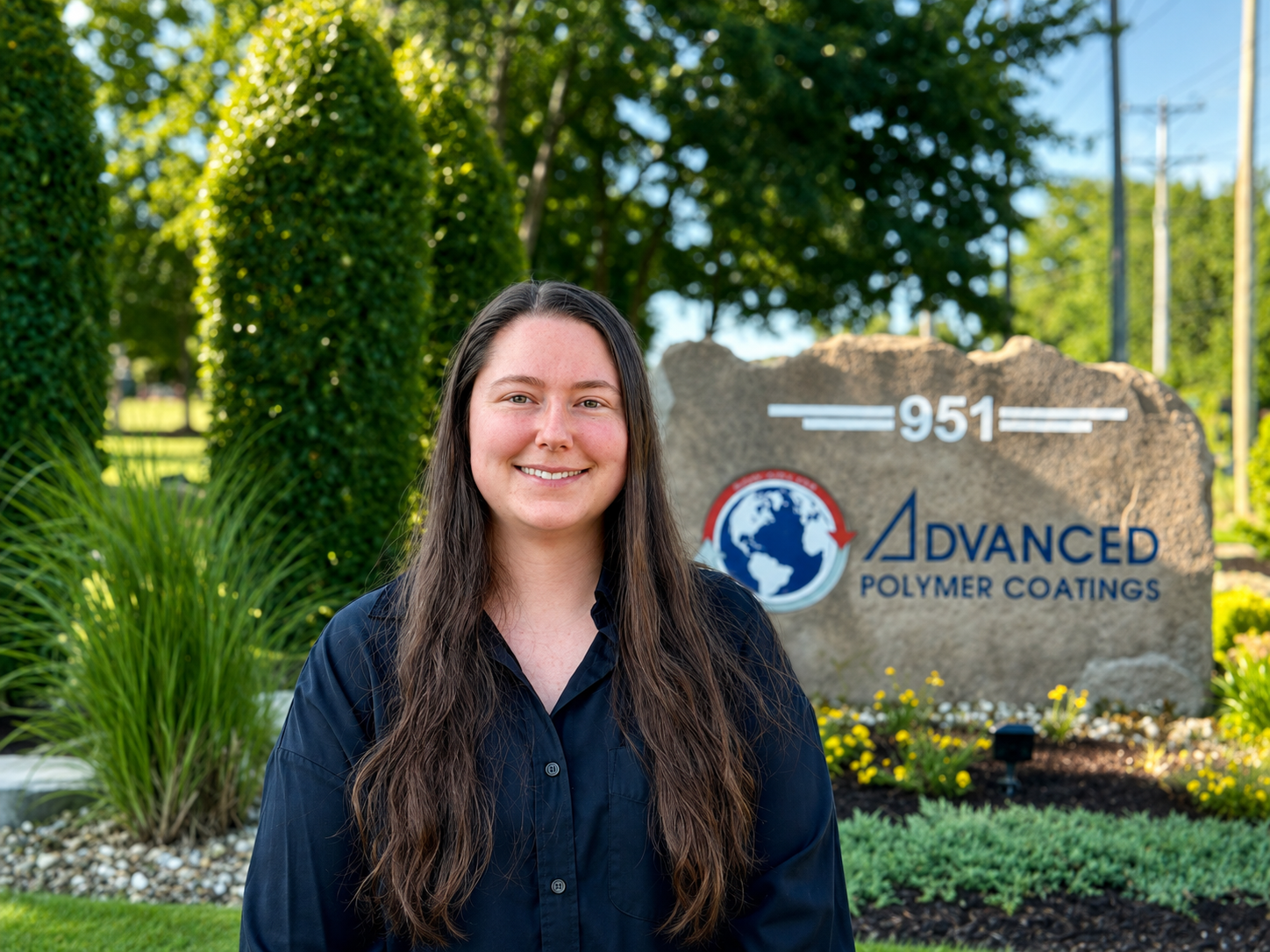





“Albert is fundamentally changing the way we have invented for over 145 years.”


